

AgiBot RAISE A1
Last edited
Fact-checked
In review queue
Sources
29 citations
Revision
v5 · 4,700 words
Fact-checks are independent of edits: a reviewer re-verifies the article against its sources and stamps the date. How we verify
| AgiBot RAISE A1 | |
|---|---|
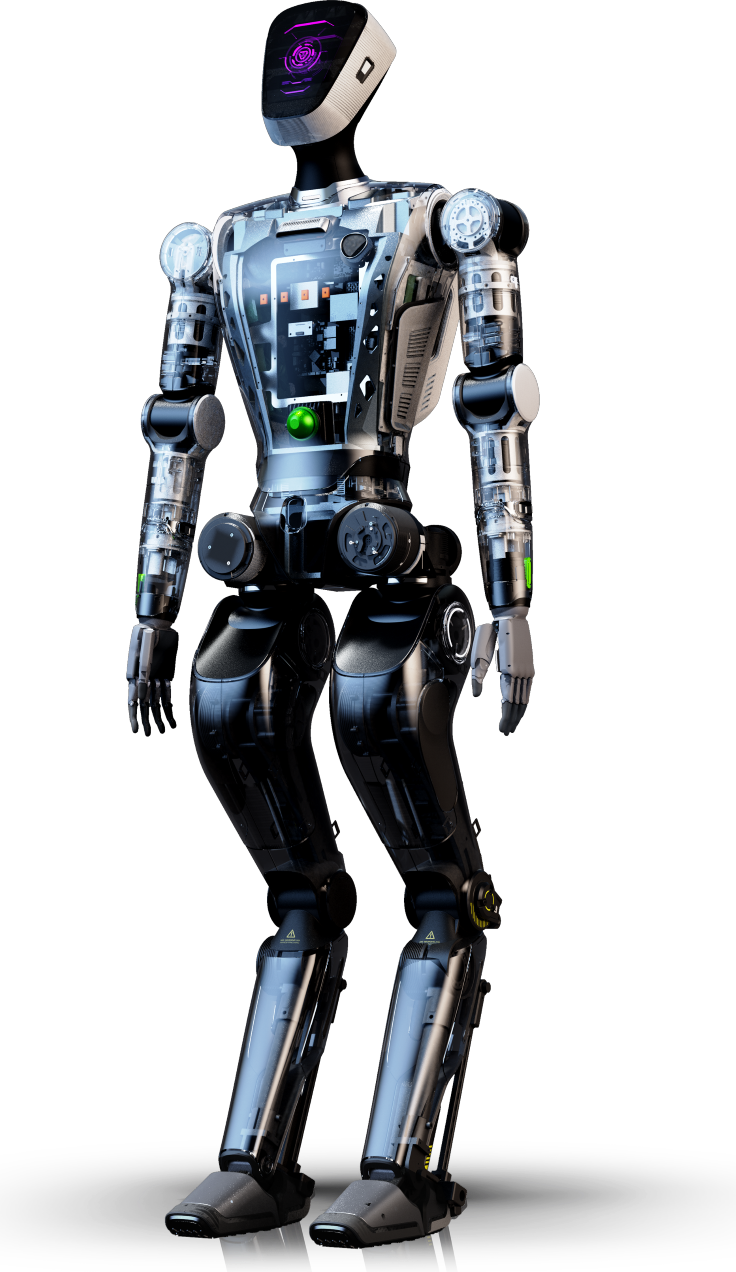 | |
| General information | |
| Manufacturer | AgiBot (Zhiyuan Robotics) |
| Chinese name | 远征A1 (Yuanzheng A1) |
| Country of origin | China |
| Year introduced | August 18, 2023 |
| Status | Prototype / Technology demonstrator |
| Target price | Below RMB 200,000 (~$30,000 USD) |
| Website | agibot.com |
The AgiBot RAISE A1 (Chinese: 远征A1, Yuanzheng A1, literally "Expedition A1") is the first humanoid robot built by AgiBot (formerly Zhiyuan Robotics), a Shanghai robotics company, unveiled on August 18, 2023, just six months after the company was founded in February 2023.[1][2] It is a full-size bipedal humanoid robot standing 175 cm tall with 49+ degrees of freedom, built as a technology demonstrator and industrial research platform for tasks such as bolt tightening, vehicle inspection, and laboratory work across the automotive, 3C manufacturing (computers, communications, consumer electronics), and logistics sectors.[3]
The RAISE A1 introduced several proprietary technologies that would become hallmarks of AgiBot's product line, including the PowerFlow quasi-direct-drive joint actuator, the SkillHand dexterous manipulation system, the EI-Brain (Embodied Intelligent Brain) hierarchical AI architecture, and the WorkGPT multimodal large language model.[4] Although the RAISE A1 itself was never mass-produced, it validated AgiBot's core engineering approach and directly informed the design of the commercially oriented AgiBot A2 series, which launched in August 2024 and became a mass-production product line. By March 2026 AgiBot had built more than 10,000 robots across that line and was ranked the world's number-one humanoid robot vendor by shipments for 2025.[5][26]
What is the AgiBot RAISE A1?
The RAISE A1 was AgiBot's inaugural product and a statement of intent: a full-size, highly articulated humanoid intended to perform real industrial work rather than to mimic human appearance. The name "RAISE" (远征, Yuanzheng, meaning "Expedition") reflected the founders' view of the A1 as the start of a longer journey toward general-purpose embodied intelligence. AgiBot's global brand name itself combines "AGI" (artificial general intelligence) and "Bot" (robot), signaling an ambition to build robots driven by general-purpose intelligence rather than narrow task-specific programming.[9]
The robot debuted into a fast-moving field of embodied AI and humanoid hardware, and its first-generation actuator, hand, AI architecture, and language-model technologies all carried forward into AgiBot's later, mass-produced robots.
History
Founding of AgiBot and the path to the RAISE A1
AgiBot was founded in February 2023 by Peng Zhihui and Deng Taihua, both former Huawei executives. Deng Taihua serves as the company's founder, chairman, and CEO, while Peng Zhihui is co-founder, president, and chief technology officer.[6][26] Peng Zhihui, born in 1993 in Ji'an, Jiangxi Province, studied biomedical engineering at the University of Electronic Science and Technology of China (UESTC), where he won over 40 engineering competition awards. He gained a massive online following on Bilibili through DIY robotics projects, including a robotic arm inspired by Iron Man's "Dummy" that garnered 2.5 million views within a day of posting. In 2020, Peng joined Huawei through its highly selective "Genius Youth" (Top Minds) recruitment program, earning an annual salary of 2 million yuan as an AI algorithm engineer. He departed Huawei in December 2022 to pursue robotics entrepreneurship.[6][7]
Deng Taihua brought 27 years of Huawei experience to the venture. He had served as Vice President and President of the Computing Product Line, overseeing ecosystem development for the Kunpeng Processor and Ascend AI Chip, and was both Peng's former supervisor and his UESTC alumnus.[6][8] Together, Peng and Deng assembled a team of engineers in Shanghai and began developing AgiBot's first humanoid robot at a rapid pace, leveraging Shanghai's established manufacturing supply chain and component ecosystem.[8]
The company was registered as AGIBOT Innovation (Shanghai) Technology Co., Ltd. (Chinese: 智元机器人, Zhiyuan Jiqiren, meaning "Intelligent Origin Robot"). The global brand name "AgiBot" was derived from combining "AGI" (artificial general intelligence) and "Bot" (robot), reflecting the founders' ambition to create robots powered by general-purpose intelligence rather than narrow task-specific programming.[9]
When was the RAISE A1 unveiled?
On August 18, 2023, AgiBot publicly unveiled the RAISE A1 at a launch event in Shanghai, just six months after the company's founding. During the presentation, a RAISE A1 unit walked onto the stage under its own power, demonstrating bipedal locomotion. Peng Zhihui presented the robot's technical architecture, including the PowerFlow joint motor, the SkillHand system, the EI-Brain AI framework, and the WorkGPT model. The event also showcased the robot performing industrial tasks such as bolt tightening and using interchangeable end-effector tools.[1][3]
The rapid development timeline attracted significant attention in China's technology sector. Peng described his design philosophy by stating: "We envision it as a capable worker rather than a mere human mimic," emphasizing practical industrial utility over humanlike appearance.[3] The robot's name, "RAISE" (远征, Yuanzheng, meaning "Expedition"), reflected the founders' view of the A1 as the beginning of a longer journey toward general-purpose embodied intelligence.
Funding and early valuation
AgiBot secured substantial funding during and shortly after the RAISE A1's development period. In September 2023, the company closed a seed round of approximately $83.8 million (600 million yuan) led by HongShan (formerly Sequoia China), with participation from Hillhouse Capital and BYD. Additional investors included Warburg Pincus and Baidu. Within three months of the RAISE A1's launch, AgiBot's valuation reached 10 billion yuan (approximately $1.4 billion), making it one of the fastest Chinese startups to achieve "unicorn" status. By December 2023, the company had completed five funding rounds, accumulating over 600 million yuan in total financing.[10][11]
BYD's involvement as both an investor and a potential customer for AgiBot's robots proved particularly strategic, as the electric vehicle manufacturer would later deploy AgiBot robots in its welding workshops for logistics and quality control tasks.[12]
Transition to the A2 series
The RAISE A1 was always intended as a technology demonstrator rather than a mass-production product. After the August 2023 unveiling, AgiBot's engineering team used the A1 platform to refine its proprietary actuator, hand, sensor, and AI technologies. In January 2024, AgiBot established its manufacturing facility in Shanghai's Lin-gang Special Area, shifting focus toward developing commercially viable successors.[5]
In August 2024, AgiBot introduced five new robot models at a product launch event: the AgiBot A2 (standard bipedal humanoid), the A2 Max (heavy-duty industrial variant), the A2-W (wheeled dual-arm platform), and two compact models in the Lingxi series (X1 and X1-W). The A2 represented a direct evolution of the RAISE A1, incorporating lessons learned from the prototype while optimizing for commercial deployment, manufacturing scalability, and safety certification.[5][13]
Key differences between the RAISE A1 and its A2 successor included refined body proportions (the production A2 stands 169 cm and weighs approximately 69 kg), an upgraded sensor suite with 360-degree LiDAR and six high-definition cameras, improved walking speed (up to 3.3 m/s or 11.9 km/h versus the A1's 1.94 m/s), hot-swappable batteries for continuous operation, and a three-layer safety monitoring architecture that would enable the A2 to become the first full-size humanoid robot certified by China, the United States, and the European Union simultaneously in May 2025.[14][15]
Design and technical specifications
The RAISE A1 was designed as a full-size bipedal humanoid with proportions approximating those of an adult human. AgiBot's engineering team prioritized industrial functionality, incorporating a modular architecture that allowed the robot to be configured for different task requirements.
What are the RAISE A1's specifications?
| Specification | Value |
|---|---|
| Height | 175 cm (5 ft 9 in) |
| Width | 550 mm |
| Weight | 53 to 55 kg (117 to 121 lb) |
| Total degrees of freedom | 49+ |
| Hand DOF (per hand) | 12 active + 5 passive |
| Maximum walking speed | 7 km/h (1.94 m/s; 4.3 mph) |
| Total load-bearing capacity | 80 kg (176 lb) |
| Single arm payload | 5 kg (11 lb) |
| AI computing power | 200 TOPS |
| Battery life | ~2 hours |
Note: Some sources report the weight as 53 kg while others cite 55 kg. The discrepancy likely reflects different measurement conditions (with or without a full battery and end-effector tooling).[1][4][16]
PowerFlow joint actuators
The RAISE A1's locomotion system is built around AgiBot's proprietary PowerFlow joint motor, a quasi-direct-drive actuator designed to balance high torque output with lightweight construction and precise force feedback. Each PowerFlow unit weighs only 1.6 kg while delivering a peak torque exceeding 350 N-m. The actuator incorporates several key technologies:[4][17]
| Component | Description |
|---|---|
| Drive architecture | Quasi-direct drive with low cogging torque design |
| Gear reduction | High-transparency planetary reducer with less than 10:1 gear ratio |
| Position sensing | Coaxial dual encoders for precise joint angle measurement |
| Thermal management | Integrated liquid cooling circulation system |
| Motor control | Self-developed vector control driver |
The quasi-direct-drive approach offers advantages over traditional high-ratio gearbox designs commonly used in industrial robots. By using a low gear ratio (under 10:1), the PowerFlow actuator preserves the motor's natural backdrivability, meaning external forces applied to the robot's limbs are transmitted back through the motor with minimal friction. This property, often called "torque transparency," is critical for safe human-robot interaction and for enabling compliant, adaptive motion during manipulation tasks. The trade-off is that low-ratio drives require higher-torque motors to achieve the same output force, which AgiBot addressed through custom motor design and liquid cooling to sustain high currents without overheating.[4][17]
The PowerFlow technology established in the RAISE A1 was subsequently refined and deployed across AgiBot's entire product line, including the A2 series (which uses improved versions of the same actuator architecture) and the compact X1 and X2 platforms (which use a smaller "PowerFlow R" variant).[18]
Reverse-knee leg design
One of the RAISE A1's most distinctive mechanical features is its reverse-jointed knee configuration, in which the knee bends in the opposite direction compared to a human leg (similar to the leg structure of ostriches or other digitigrade animals). This design choice expands the robot's range of motion in the sagittal plane, providing greater flexibility and a wider operational workspace for the lower limbs. The reverse-knee geometry also shifts the center of mass forward relative to the support polygon, which can improve dynamic stability during walking by keeping the robot's weight distributed favorably over the feet.[3][4]
Combined with the high-torque, backdrivable PowerFlow actuators, the reverse-knee design enabled the RAISE A1 to achieve stable bipedal walking at speeds up to 7 km/h and to maintain balance when subjected to external pushes or disturbances during demonstrations. This contrasted with the forward-knee (anthropomorphic) designs used by most competing humanoids at the time, such as the Unitree H1 and Fourier GR-1, both of which also launched in 2023.[3]
Notably, AgiBot shifted to a conventional forward-knee design for the successor A2 series, likely to improve compatibility with human-designed workspaces (such as stairways, vehicle interiors, and existing manufacturing fixtures) and to facilitate more natural-looking gait patterns for service-oriented applications.[14]
SkillHand dexterous manipulation
The RAISE A1's hands use AgiBot's SkillHand design, a five-fingered dexterous end-effector featuring 12 active degrees of freedom and 5 passive degrees of freedom per hand, with all drive mechanisms integrated inside the hand unit. The SkillHand was designed to support a wide range of manipulation tasks, from precision operations (fine alignment, tool use on small parts) to power grasps (bin handling, workstation operations).[4][19]
A defining feature of the SkillHand is its integrated visual fingertip sensing. Each fingertip contains miniature cameras capable of identifying the color, shape, and material of objects being grasped, while also providing simulated pressure sensing through visual deformation analysis. This approach reduces the cost and complexity of the hand by decreasing the precision requirements for mechanical components; instead of relying solely on expensive tactile sensors, the system uses vision-based methods to infer contact forces and object properties.[3][4]
AgiBot targeted a production cost of below 10,000 yuan (approximately $1,400 USD) per SkillHand unit, a significant reduction compared to competing dexterous robot hands that often cost tens of thousands of dollars.[3] The SkillHand technology was later succeeded by AgiBot's OmniHand series, which expanded the dexterous hand lineup for the A2 and G2 product families.[20]
Modular configuration
The RAISE A1 was designed with a modular architecture allowing different end-effector tools and mobility bases to be attached depending on the application. In addition to the standard bipedal configuration, AgiBot indicated that wheeled and tracked base variants were possible. The arm-end interfaces supported interchangeable tools including screwdrivers, electric drills, and inspection instruments, enabling the robot to switch between tasks without hardware redesign.[3]
AI and software architecture
The RAISE A1 introduced AgiBot's first-generation AI software stack, centered on the Embodied Intelligent Brain (EI-Brain) architecture and the WorkGPT multimodal model. These systems represented AgiBot's approach to bridging the gap between high-level language understanding and low-level motor control in humanoid robots.
EI-Brain hierarchical architecture
The EI-Brain is a four-tier computational architecture that divides robot intelligence into distinct functional levels, each responsible for a different abstraction layer of task execution:[4][21]
| Level | Component | Function |
|---|---|---|
| Mission level | Cloud Superbrain | High-level task planning, natural language understanding, long-horizon reasoning via cloud-based compute and WorkGPT |
| Skill level | Main Brain | Mid-level skill selection and sequencing, translating mission plans into executable skill primitives |
| Instruction level | Sub-brain | Low-level motion planning and trajectory generation for individual joint movements |
| Servo level | Brainstem | Real-time motor control, sensor fusion, and safety monitoring at the hardware level |
This hierarchical decomposition allows the robot to process a natural language instruction (e.g., "tighten the bolts on this panel") at the mission level, break it down into a sequence of skills (approach panel, grasp tool, locate bolt, apply torque) at the skill level, generate specific joint trajectories at the instruction level, and execute smooth, force-controlled motions at the servo level. The separation of concerns also enables different update cycles: the cloud-connected upper layers can be updated via software patches, while the real-time lower layers maintain deterministic control loops.[4][21]
WorkGPT multimodal model
WorkGPT is AgiBot's self-developed multimodal large language model that operates at the mission level of the EI-Brain architecture. It integrates large language model (LLM) and vision-language model (VLM) capabilities to enable the robot to understand user intent from natural language or visual cues, perceive the surrounding environment through camera feeds, and orchestrate multi-step task execution by selecting and sequencing appropriate skill primitives.[4][21]
AgiBot enhanced WorkGPT's perceptual and decision-making capabilities by training it on a proprietary robot task dataset, supplementing general-purpose language and vision training with domain-specific robotics data. This allowed the model to reason about spatial relationships, object affordances, and task-relevant physical constraints in ways that generic language models typically cannot.[21]
WorkGPT represented AgiBot's first foray into foundation model development for robotics, a line of work that would later scale dramatically with the AgiBot World dataset and the GO-1 foundation model (see below).
From WorkGPT to AgiBot World and GO-1
The data-driven approach pioneered with WorkGPT culminated in the release of AgiBot World, which AgiBot describes as the largest publicly available real-world humanoid manipulation dataset. AgiBot released the dataset (AgiBot World Alpha) on December 30, 2024, and detailed it in the March 2025 technical report "AgiBot World Colosseo: A Large-scale Manipulation Platform for Scalable and Intelligent Embodied Systems."[26][27]
| AgiBot World dataset | Value |
|---|---|
| Trajectories | 1,001,552 (over 1 million) |
| Total duration | 2,976.4 hours |
| Tasks | 217 |
| Skills | 87 |
| Scenes | 106 |
| Application domains | 5 (domestic, retail, industrial, restaurant, office) |
| Collection fleet | More than 100 homogeneous robots |
| License | Open source |
Building on this data, AgiBot launched GO-1 (Genie Operator-1) in March 2025, a generalist embodied foundation model trained on "over a million real robot demonstrations."[26][28] GO-1 introduced the Vision-Language-Latent-Action (ViLLA) framework, which combines a vision-language model with a mixture-of-experts policy. According to AgiBot, the framework's Latent Planner "predicts Latent Action Tokens based on intermediate outputs from the VLM, forming a Chain of Planning (CoP) for general action understanding and planning," while the Action Expert "generates the final fine-grained action sequences."[28] AgiBot subsequently released GO-2, a dual-system successor model for high-frequency manipulation control.[29]
Sensor suite
The RAISE A1 integrates a multi-modal sensor array for environmental perception:
| Sensor | Function |
|---|---|
| RGB-D camera | Color and depth imaging for 3D object recognition and scene understanding |
| LiDAR | 3D spatial mapping, obstacle detection, and environmental analysis |
| Microphone array | Audio input for voice commands and sound source localization |
| IMU (inertial measurement unit) | Body orientation and acceleration sensing for balance control |
| SkillHand fingertip cameras | Visual-based tactile sensing for grasp quality assessment |
The 200 TOPS onboard computing platform processes data from all sensors in real time, enabling the robot to maintain situational awareness while executing manipulation tasks. The robot also supports Wi-Fi (2.4 GHz and 5 GHz), Ethernet, USB, HDMI, and Bluetooth connectivity for remote monitoring, data upload, and cloud AI integration.[4][16]
What is the RAISE A1 used for?
Industrial use cases
The RAISE A1 was primarily designed for industrial applications in the automotive, 3C manufacturing, and logistics sectors. AgiBot demonstrated the robot performing several task categories during and after the August 2023 launch event:[1][3]
- Assembly line operations: Bolt tightening on automotive components using interchangeable screwdriver attachments, with the PowerFlow actuators providing precise torque control.
- Quality inspection: Vehicle exterior inspections using onboard cameras and LiDAR to identify defects or deviations from manufacturing tolerances.
- Laboratory work: Handling of laboratory materials and instruments, including transferring containers between workstations.
- Tool manipulation: Grasping and operating hand tools such as electric drills and inspection instruments through the SkillHand system.
Household vision
Beyond industrial deployment, Peng Zhihui articulated a long-term vision for the RAISE A1 platform (and its successors) as household assistants. He described three envisioned domestic roles: chef, nanny, and caregiver, with the robot capable of cooking, doing laundry, and providing elder care. However, Peng estimated that achieving reliable household deployment would require five to eight years of further development, placing this goal in the late 2020s timeframe.[3]
Pricing and production strategy
AgiBot set a long-term target of reducing the RAISE A1's hardware cost to below 200,000 yuan (approximately $30,000 USD), a price point intended to make humanoid robots economically viable for industrial customers. At the time of the 2023 launch, the actual estimated production cost was approximately 650,000 yuan ($90,000 USD) per unit, reflecting the early-stage nature of the supply chain and manufacturing processes. Approximately 80 to 90 percent of the robot's components were sourced from domestic Chinese suppliers.[3]
Is the RAISE A1 mass-produced?
No. The RAISE A1 was never mass-produced. Instead, a limited number of prototype units were built for internal testing, demonstrations, and research purposes. AgiBot's mass production efforts focused on the successor A2 series, which entered production in late 2024 and scaled to over 10,000 cumulative units across AgiBot's product line by March 2026.[12][26]
How does the RAISE A1 differ from the AgiBot A2?
The RAISE A1 served as the direct predecessor to the AgiBot A2 series, and many of its core technologies carried forward into the production platform. The following table summarizes the key differences between the A1 prototype and the A2 production model:
| Feature | RAISE A1 (2023) | AgiBot A2 (2024) |
|---|---|---|
| Status | Prototype / demonstrator | Mass production |
| Height | 175 cm | 169 cm |
| Weight | 53 to 55 kg | ~69 kg |
| Degrees of freedom | 49+ | 40+ active |
| Maximum walking speed | 7 km/h (1.94 m/s) | 11.9 km/h (3.3 m/s) |
| Single arm payload | 5 kg | 15 kg |
| Knee design | Reverse-jointed (digitigrade) | Forward-jointed (anthropomorphic) |
| LiDAR | Single unit | 360-degree panoramic |
| Cameras | RGB-D | Six HD cameras (RGB-D, RGB, fisheye) |
| Battery system | Standard | Hot-swappable (700 Wh) |
| Safety certifications | None | CR (China), FCC (US), CE (EU) |
| AI model | WorkGPT | WorkGPT + ActionGPT + HIMUS 3D-SLAM |
| Price | ~$90,000 est. production cost | $100,000 to $130,000 |
| Units produced | Limited prototypes | Thousands (part of 10,000+ total AgiBot units) |
The A2's shift to a shorter, heavier frame with an anthropomorphic knee configuration reflected AgiBot's pivot from a research-oriented platform to a commercially deployable product. The A2 gained higher walking speeds through improved actuator design and gait optimization, while the addition of 360-degree LiDAR and multiple camera types provided more robust perception for autonomous navigation in unstructured environments. The hot-swappable battery system, absent from the A1, enabled continuous operation in factory settings.[14][15]
The A2 series also expanded into multiple specialized variants: the A2 Lite (cost-reduced for customer-facing roles), the A2 Ultra (enhanced perception), the A2 Max (heavy-duty industrial with 40 kg payload), and the A2-W (wheeled dual-arm platform for factory automation). This product diversification was made possible by the modular engineering foundation established during the RAISE A1's development.[13]
Competitive context
The RAISE A1 debuted during a period of intense activity in China's humanoid robotics sector. Several Chinese companies unveiled full-size humanoid robot prototypes in 2023, creating a competitive landscape that would define the industry's trajectory over the following years.
Chinese humanoid robots launched in 2023
| Robot | Company | Height | Weight | DOF | Max Speed | Key Feature |
|---|---|---|---|---|---|---|
| RAISE A1 | AgiBot | 175 cm | 53 to 55 kg | 49+ | 7 km/h | PowerFlow actuators, WorkGPT AI |
| H1 | Unitree Robotics | 180 cm | 47 kg | 24 | 5.6 km/h (later 11.88 km/h) | Speed record, backflip capability |
| GR-1 | Fourier Intelligence | 165 cm | 55 kg | 40 | 5 km/h | Rehabilitation background, 100+ units delivered |
| Star1 | RobotEra | 171 cm | 52 kg | 44 | 6 km/h | Open-source components |
| CL-1 | LimX Dynamics | 130 cm | 45 kg | 22 | N/A | Compact design, strong locomotion |
Internationally, the RAISE A1's launch coincided with growing interest in humanoid robots from companies including Tesla (which had demonstrated its Optimus prototype in 2022 and continued development through 2023), Figure AI (which unveiled its Figure 01 in early 2023), and Agility Robotics (which expanded production of its Digit robot).[24]
The RAISE A1 distinguished itself from these competitors through several design choices. Its 49+ degrees of freedom was among the highest in the 2023 cohort, reflecting AgiBot's emphasis on dexterous manipulation over pure locomotion performance. The integrated WorkGPT language model was one of the first attempts to embed a multimodal large language model directly into a humanoid robot's control architecture for task-level reasoning. The PowerFlow actuator's 350 N-m peak torque in a 1.6 kg package represented a strong power-to-weight ratio for the quasi-direct-drive class. And the SkillHand's visual fingertip sensing offered a novel alternative to traditional force-torque and tactile sensor arrays.[1][4]
However, the RAISE A1's reverse-knee design was unconventional and potentially limiting for human-compatible workspaces, its single-arm payload of 5 kg was modest compared to industrial requirements, and as a prototype it lacked the safety certifications and manufacturing readiness that would be needed for commercial deployment. AgiBot addressed all of these limitations in the subsequent A2 series.[14]
Legacy and significance
The RAISE A1 holds historical significance as the product that launched AgiBot's trajectory from a six-month-old startup to one of the world's largest humanoid robot producers by volume. Several of its contributions proved foundational:
- PowerFlow actuator platform: The quasi-direct-drive joint technology debuted in the RAISE A1 became the basis for all subsequent AgiBot robots, from the full-size A2 to the compact X2 to the industrial G2 Genie.
- EI-Brain architecture: The four-tier hierarchical AI framework established a software design pattern that AgiBot continued to develop, eventually evolving into the GO-1 and GO-2 foundation models and the Lingqu OS embodied operating system.
- SkillHand lineage: The dexterous manipulation approach pioneered in the RAISE A1's SkillHand informed the development of AgiBot's OmniHand series and the 19-DOF industrial hands used in the A2 Max.
- Rapid prototyping model: The six-month concept-to-prototype timeline demonstrated that a well-funded startup could leverage China's manufacturing ecosystem to develop competitive humanoid hardware at unprecedented speed, setting expectations for the broader Chinese humanoid robotics industry.
- Investor confidence: The RAISE A1's successful demonstration secured the funding that enabled AgiBot to build its manufacturing facility, develop the A2 series, and scale to mass production.
How big is AgiBot now?
By March 2026, AgiBot had built more than 10,000 robots across its product line. According to the analytics firm Omdia, AgiBot ranked number one globally in humanoid robot shipment volume and market share for 2025, with the company shipping over 5,100 units and capturing an estimated 39 percent of the global market that year.[26] AgiBot's production also accelerated sharply: the company took nearly two years to reach its first 1,000 units, about one more year to scale from 1,000 to 5,000, and only three months to climb from 5,000 to 10,000, a more than fourfold acceleration in build rate.[26]
Peng Zhihui, AgiBot's chief technology officer, framed the milestone as a structural change rather than a numbers game, stating: "Reaching 10,000 units is not simply about producing more robots, it reflects a fundamental shift in our ability to scale."[26] The company was also preparing for a Hong Kong IPO, with Reuters reporting a targeted valuation of roughly HK$40 billion to HK$50 billion (about $5.1 billion to $6.4 billion) and a banking syndicate of CICC, CITIC Securities, and Morgan Stanley.[25] All of this traced back to the RAISE A1 prototype that walked onto a Shanghai stage in August 2023.
See also
- Humanoid robot
- Humanoid robots
- Humanoid robot market
- AgiBot
- AgiBot A2
- AgiBot A2 Max
- AgiBot A2-W
- AgiBot X2
- Embodied AI
- Degrees of freedom
References
- Expedition A1 is a robot that can cook, do laundry, and take care of the elderly - KrASIA ↩
- AGIBOT RAISE-A1: From Concept to Reality in Just Six Months - Addoobot ↩
- China: Agibot unveils humanoid robots to take on Tesla Optimus - Interesting Engineering ↩
- AgiBot RAISE A1 official product page - AgiBot ↩
- AgiBot unveils five humanoid robots, commercialization on the horizon - KrASIA ↩
- Meet Peng Zhihui, the 32-year-old mind behind Agibot - VnExpress International ↩
- From Huawei 'Genius' to Robotics Entrepreneur: The Rise of Peng Zhihui - Humanoids Daily ↩
- AgiBot - Wikipedia ↩
- The Rise of AgiBot (Zhiyuan Shanghai Robotics) - Mike Kalil ↩
- China's Young Tech Star Gears Up for Commercial Launch of Humanoid Robots in 2024 - The China Academy ↩
- China's Agibot eyes 1,000-humanoid robot army to beat Elon Musk's Tesla - Interesting Engineering ↩
- AGIBOT Reaches 10,000 Units as Real-World Demand for Robots Accelerates - PR Newswire ↩
- AgiBot unveils five humanoid robots - KrASIA ↩
- AgiBot A2 official product page - AgiBot ↩
- Shanghai firm unveils world's first humanoid robot certified in China, U.S., and EU - ECNS ↩
- AgiBot RAISE A1 specifications - Aparobot ↩
- AgiBot RAISE A1 specifications - Botsanddrones.asia ↩
- AgiBot X1 official product page - AgiBot ↩
- RAISE A1 specifications - Humanoid.guide ↩
- AgiBot OmniHand Series - Robots International ↩
- AgiBot RAISE A1 product detail - AgiBot ↩
- AgiBot GO-1: The Evolution of Generalist Embodied Foundation Model from VLA to ViLLA - GlobeNewsWire
- AGIBOT releases GO-2 foundation model for embodied AI - The Robot Report
- Humanoid Robots 2024: Products and brands - One Finite Planet ↩
- Chinese robot maker AgiBot plans Hong Kong IPO - Reuters/Yahoo Finance ↩
- AGIBOT Reaches 10,000 Units as Real-World Demand for Robots Accelerates - PR Newswire ↩
- AgiBot World Colosseo: A Large-scale Manipulation Platform for Scalable and Intelligent Embodied Systems - arXiv:2503.06669 ↩
- AgiBot GO-1: The Evolution of Generalist Embodied Foundation Model from VLA to ViLLA - GlobeNewsWire ↩
- AGIBOT releases GO-2 foundation model for embodied AI - The Robot Report ↩
Improve this article
Add missing citations, update stale details, or suggest a clearer explanation. Every suggestion is reviewed for sourcing before it goes live.
4 revisions by 1 contributors · full history